

When a Death Occurs in Singapore
What happens next: Contact our funeral director to discuss your family’s requirements, confirm availability and receive a written quotation before the arrangements proceed.
The first four steps
The exact process varies, but families can use this sequence to understand what usually comes next.
Confirm the circumstances
Identify whether the death occurred in a hospital, at home or in circumstances requiring the authorities.
Obtain guidance
Follow the doctor, hospital or police instructions for certification and release.
Inform the family
Contact the next of kin and gather any known wishes or pre-planning information.
Plan the funeral
Speak with a funeral director after the required first steps are underway.
Safety comes first. For a sudden, unexplained or unnatural death, follow police instructions before making funeral arrangements.
You Do Not Need Every Answer Immediately
First Steps After a Death
If the death occurs in a hospital, the hospital team will explain the certification and collection process. If it occurs at home, contact the attending doctor when the death is expected and the doctor is able to certify it. For a sudden, unexplained or unnatural death, contact the police and follow the authorities’ directions.
Official procedures can change. Families should rely on current guidance from Singapore government agencies and the professionals handling the case. Do not move the deceased or make assumptions about documentation when the circumstances require official assessment.
Planning the Arrangements Carefully
A useful way to approach what to do when someone dies is to separate immediate decisions from choices that can be made after the family has more information. Begin with the deceased’s known wishes and the next of kin’s priorities. Then identify which documents, bookings, people and facilities are involved. This keeps the discussion focused and helps the family avoid agreeing to details before the overall arrangement is understood.
For this service, the main considerations are at a hospital, at home, unexpected circumstances, after certification. Each affects a different part of the plan, so they should be discussed together rather than treated as isolated purchases. If the family is uncertain, our funeral director can explain the available sequence and note which decisions must be confirmed first. Requests involving a venue, authority, religious representative or external operator remain subject to that party’s requirements and availability.
A Clear Family Decision Process
The working sequence is confirm the circumstances, obtain guidance, inform the family, plan the funeral. Naming one family contact usually makes communication easier, especially when several relatives are involved. That person can gather questions, confirm the family’s decisions and share updates with others. Where a religious or cultural practice is important, the family should also identify the appropriate representative early so that practical arrangements do not conflict with the intended rites.
Before approving the service, review the written scope from beginning to end. Check the agreed timing, responsibilities, included items, optional requests and any condition that could change the plan. Ask what the family needs to provide and what Care Funeral Services will coordinate. A clear record reduces uncertainty and gives everyone a common understanding of what will happen next.
Information That Helps the Funeral Director
Good planning also accounts for the people attending. Consider older relatives, children, visitors with mobility needs and family members travelling from overseas. Access, waiting time, transport and the length of the programme can influence how manageable the day feels. These practical details should support the farewell rather than distract from it.
Plans sometimes need to change because of documentation, facility availability, weather, religious guidance or family circumstances. We will explain confirmed information and avoid treating an unapproved date or third-party service as guaranteed. If a change is required, the family contact can review the available alternatives before a revised arrangement is accepted.
Documents and Official Arrangements
Care Funeral Services coordinates the agreed funeral-related work and keeps the family informed throughout the arrangement. Our role is to bring the practical parts together respectfully, while the family retains control over personal, religious and memorial choices. We encourage questions at every stage, particularly when a term, optional item or external requirement is unfamiliar.
It is also helpful to distinguish confirmed facts from preferences that are still being discussed. Dates, venues, facility appointments and services supplied by another party should be treated as provisional until confirmation is received. Personal choices can then be recorded alongside the practical schedule, giving relatives a clear view of what has been decided and what remains open. Before the day itself, the nominated family contact should review the sequence once more, share essential instructions with close relatives and raise any change promptly. This final check supports a calmer experience and reduces the risk of different family members acting on conflicting information.
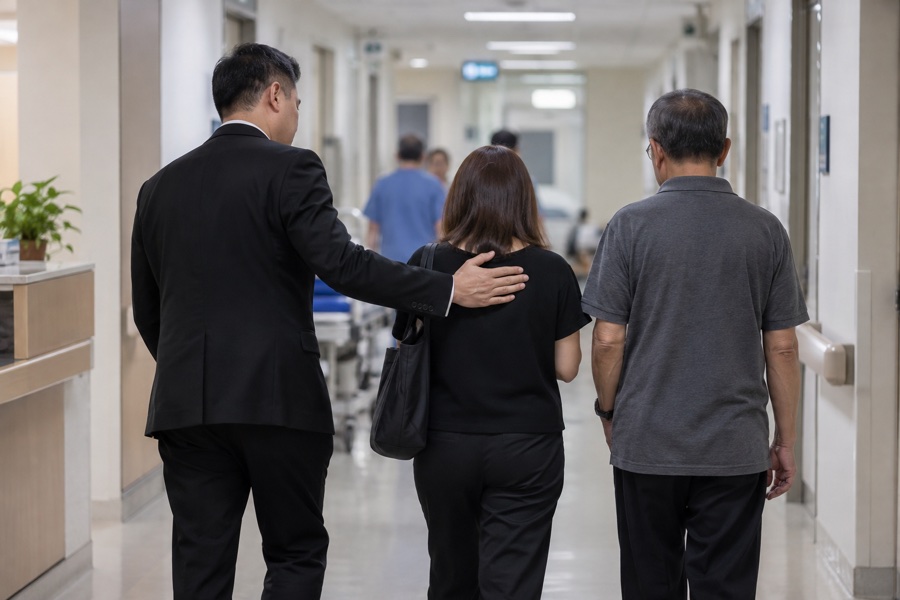
At a Hospital
Follow the hospital’s instructions for certification, documentation and release of the deceased.
At Home
Contact the attending doctor if the death was expected; otherwise seek guidance from the appropriate authority.
Unexpected Circumstances
For a sudden, unexplained or unnatural death, contact the police and preserve the scene as directed.
After Certification
Inform the next of kin and speak with a funeral director about the family’s wishes and practical arrangements.

Information That Helps the Funeral Director
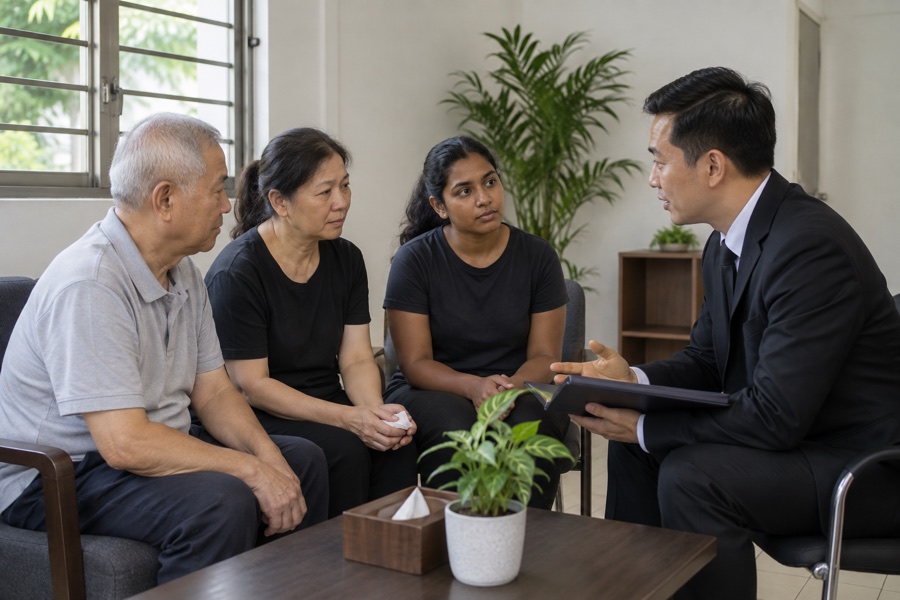
Be ready to share where the death occurred, who the next of kin is, whether certification has been completed, the deceased’s faith or wishes, and any initial preference for a wake, cremation or burial. If some decisions have not been made, they can be discussed later.
The required documents and permits depend on the circumstances. Use current official instructions for the digital death certificate, burial or cremation permits and facility bookings. We can explain how the confirmed funeral arrangements fit into that process.
We listen to the circumstances and explain the next practical funeral-arrangement steps.
Planning the Farewell
We discuss the family’s traditions, venue preferences and service requirements.
Coordinating Arrangements
After the necessary documentation is in place, we coordinate the agreed wake and funeral-day services.
This page provides general funeral-planning information and does not replace instructions from a doctor, hospital, police officer or government agency. Always follow the authority responsible for the circumstances of the death.
For a sudden, unexplained or unnatural death, follow police instructions before making funeral arrangements.
Why Choose Us
Care Funeral Services has supported Singapore families since 1996. For what to do when someone dies, we provide calm, practical guidance and confirm the arrangements before work proceeds. Our team understands that bereaved families may be making unfamiliar decisions under emotional pressure, so we explain the sequence in clear language and give the family an opportunity to ask questions. We coordinate the agreed details with care, respect the deceased’s wishes and the family’s traditions, and communicate when an official requirement, facility rule or third-party arrangement affects the plan. From the first discussion through the confirmed next step, our focus is a dignified service and dependable support for the family.
Frequently Asked Questions
What should we do first when someone dies? | Identify where and how the death occurred, then follow the hospital, attending doctor or police instructions for certification and release. |
Should we contact a funeral director immediately? | You may contact us for guidance, but the required medical or official process must be followed for the circumstances of the death. |
What information should we prepare? | It helps to know the place of death, next of kin, certification status, faith or wishes, and any initial wake preference. |
What if the family has not chosen a funeral type? | That is all right. We can explain the available options after understanding the deceased's wishes and the family's needs. |
Can official procedures change? | Yes. Always follow current instructions from the relevant Singapore authorities and professionals handling the case. |